
A crypto payment gateway without a monthly fee is usually a good fit when payment volume is low, seasonal or unpredictable because the merchant does not pay a recurring software charge during quiet months. The decision still depends on what triggers the fee, whether pricing is fixed or percentage-based, where funds settle and which services are included. A no-monthly-fee gateway can become expensive at high volume, while a subscription or prepaid package can waste money when its included capacity expires unused. Compare at least a quiet month, an expected month and a growth month using both transaction count and payment value. The best pricing model is the one with the lowest total cost for the required custody, checkout, verification, support and settlement workflow.
| Pricing model | Cost moves with | Usually fits | Main risk |
|---|---|---|---|
| Fixed fee per confirmed payment | Number of successful payments | High-value invoices and variable volume | Small payments can carry a high effective percentage |
| Percentage of payment value | Total processed value | Low-value orders or bundled settlement services | Cost increases directly with order size |
| Monthly subscription | Time and sometimes included volume | Predictable, consistently used capacity | Quiet months still cost money |
| Prepaid volume package | Capacity purchased for a defined period | Stable volume that uses most of the package | Unused or expired capacity raises the effective unit cost |
| Self-hosted software | Infrastructure and internal labour | Teams that value control and can operate the stack | Free software is not free operation |
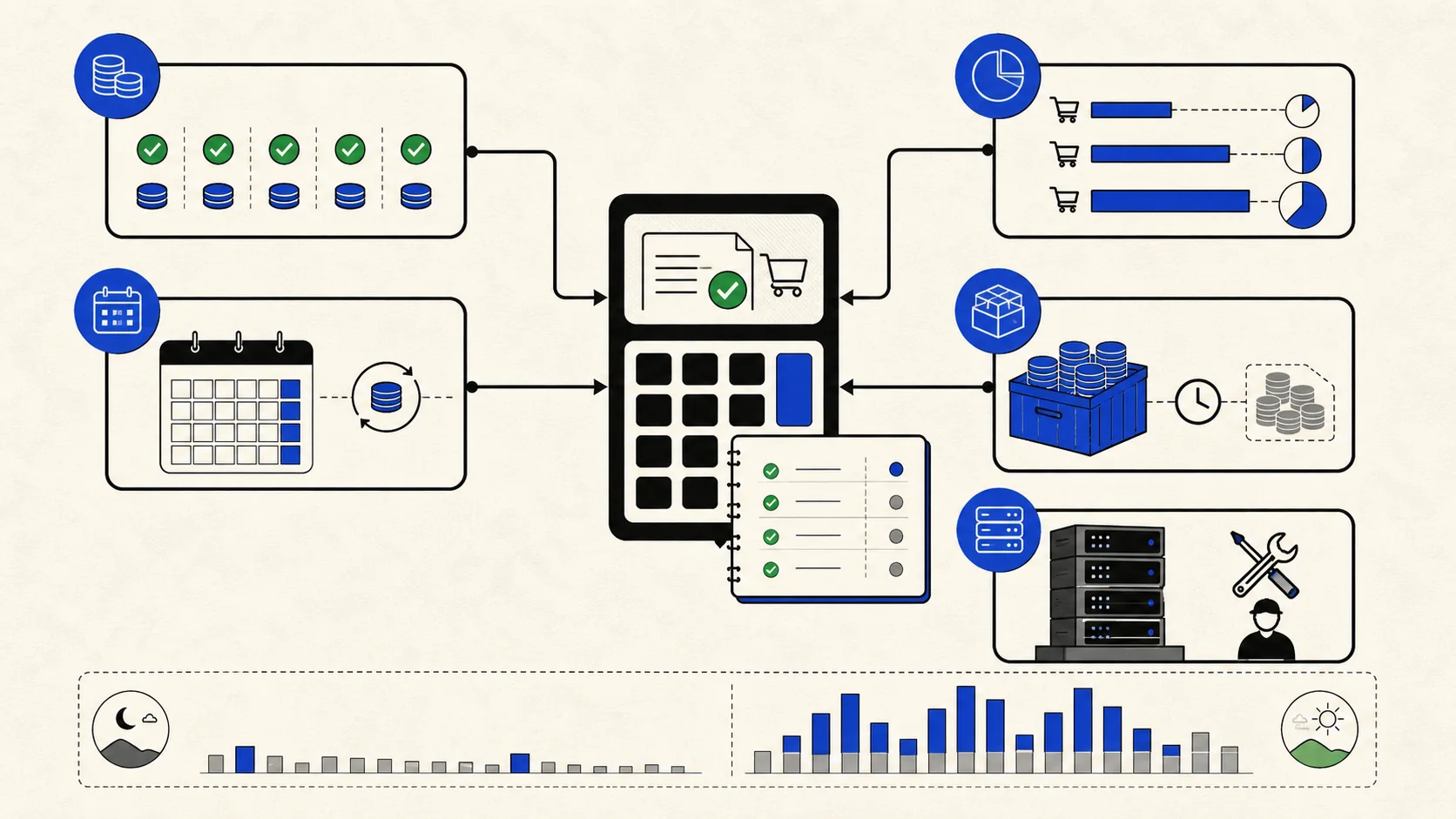
When a crypto payment gateway without a monthly fee fits
No recurring charge is most valuable when revenue is irregular. A consultant may receive four large client payments one month and none the next, while a seasonal store may process most orders during a short campaign. A new product also needs time to learn whether customers will use stablecoin checkout at all. Pay-as-you-go pricing keeps the fixed cost close to zero while that demand is uncertain. It also makes a small production pilot easier to approve because the merchant can test real payments without committing to recurring capacity.
Transaction count alone does not decide the fit. A fixed ten-cent processing charge is tiny on a thousand-dollar invoice but represents two percent of a five-dollar purchase. A percentage charge behaves in the opposite direction because it stays proportional to order value. A monthly subscription can be efficient at steady scale even though it looks expensive before the first transaction. Write down both the expected number of successful payments and their average value before comparing any plans.
The required product outcome matters as much as arithmetic. A direct-to-wallet gateway that verifies an on-chain transfer is not equivalent to a processor that converts stablecoins to fiat, performs broader screening and manages payouts. A self-hosted checkout is not equivalent to a managed service with support and delivery diagnostics. Start with the custody and settlement model defined in the crypto payment gateway selection guide, then compare prices only among options that can perform the required job. The cheapest unsuitable product is still an expensive decision.
Understand the five common pricing structures
A fixed success fee charges the same processing amount for every qualifying payment. This model is easy to forecast from transaction count and can be attractive for high-value orders because the fee does not grow with revenue. The merchant must confirm the exact billable event, since invoice creation, detected payment, confirmed payment and settled payment are different states. Failed or unpaid invoices should not be assumed free unless the current pricing terms say so. Refunds, repeated callbacks and manual reviews may also follow separate rules.
A percentage model charges a share of payment value, sometimes with an additional fixed amount. It naturally scales down in dollars for small orders and scales up for large ones. The quoted percentage may include conversion, custody, screening, gas sponsorship or fiat settlement that another product leaves to the merchant. Stripe’s current public pricing lists stablecoin acceptance as a percentage and describes several services included in that rate. Compare the complete outcome rather than treating percentage as a synonym for expensive.
A subscription charges for access over time and may include a lower processing rate or transaction allowance. It becomes efficient when volume is stable enough to use the included capacity and the avoided unit fees exceed the subscription. It becomes waste when the business pays through inactive months or overestimates growth. Contract length, cancellation conditions, overage rates and included accounts belong in the calculation. A low monthly price can still create lock-in if the integration or data export is difficult to replace.
A prepaid package sits between subscription and pay-as-you-go. The merchant purchases a known quantity of payment processing for a period, often at a lower effective unit price. Savings are real only when enough capacity is consumed before expiry, so the calculation needs an expected utilization rate rather than the advertised full-package rate. A package that is half used has roughly twice the headline cost per used event. Check whether another package can be queued, whether unused units roll over and what happens after the allowance is exhausted.
Self-hosted open-source software may have no processor subscription or per-payment charge at all. BTCPay Server’s deployment documentation describes its software as free and open source while noting that many users run it through a cloud hosting provider. Hosting, node services, backups, monitoring, upgrades, security response and skilled staff remain economic costs even when the licence is free. Self-hosting can be the correct control model for a capable team, but it should never be entered into a comparison table as zero. Assign a realistic monthly value to infrastructure and internal labour.
Calculate total monthly cost with the same formula
Use one worksheet for every candidate and keep included services visible. The core calculation is monthly fee plus transaction charges plus percentage charges plus settlement and conversion costs plus infrastructure and internal labour. Apply it to a quiet, expected and growth scenario rather than one optimistic forecast. Include only successful payments if that is the provider’s billable event, but add a separate operational estimate for unpaid and exceptional invoices. Date every rate and link to the current official pricing source because payment products change.
| Cost component | Calculation | Question to verify |
|---|---|---|
| Monthly platform fee | Fixed amount per month | Is there a contract or minimum term? |
| Fixed processing | Successful payments x fixed fee | What exact status becomes billable? |
| Percentage processing | Payment value x percentage | Which conversion or settlement services are included? |
| Package capacity | Package price / capacity actually used | Does unused capacity expire? |
| Payout or conversion | Payout count, value, spread and minimums | Can the merchant receive the desired asset directly? |
| Network cost | On-chain transfers, refunds and treasury moves | Who pays each blockchain transaction? |
| Operations | Staff time x internal hourly cost | Who reconciles exceptions and maintains the integration? |
An average-order calculation exposes the difference between fixed and percentage pricing quickly. At a fixed fee of $0.10, a $5 payment carries a two-percent processing cost, a $100 payment carries 0.1 percent and a $1,000 payment carries 0.01 percent. At a 1.5-percent rate, those same payments cost $0.075, $1.50 and $15 before any additional fee. The fixed and percentage models are equal when the average order value equals fixed fee divided by percentage, which is $6.67 in this illustration. This comparison says nothing about product quality or included services, but it reveals which order values deserve closer analysis.
A subscription comparison uses a different break-even point. If pay-as-you-go costs P per successful payment, a plan costs S per month and reduces the unit cost to R, the volume break-even is S / (P - R) when all other services are equal. Packages require an additional utilization check because the merchant may pay for capacity it never uses. Model several real months from order history rather than using the busiest month as the default. Recalculate when average order value, refund frequency or customer geography changes materially.
Verify what the provider actually charges for
The word transaction is dangerously imprecise in pricing. It can mean an invoice created, a payment detected, a transfer confirmed, a settlement completed, a refund sent or an API operation. A business with many abandoned checkouts cares whether unpaid invoices consume credit, while an integration with retries cares whether duplicate creation attempts can be billed twice. Ask how partially paid, overpaid, late, cancelled and manually resolved invoices are treated. The answer should be written in current pricing or contract terms, not inferred from a marketing label.
The billable event should align with value delivered to the merchant. Charging for a successfully confirmed payment is easier to relate to revenue than charging for every invoice created, although the business still needs a safe definition of confirmed. A detected transaction that later fails or never meets the route’s confirmation policy should not silently become equivalent to paid. The merchant must also prevent one transaction hash from closing two invoices and make fulfilment idempotent when notifications repeat. Automated payment verification explains the status and evidence behind that event.
Prepaid credit needs equally careful reading. Confirm whether account credit expires, whether package capacity expires, which balance is consumed first and whether package prices include taxes. Check if a failed payment investigation, support escalation or additional user creates another fee. If the product supports both manual payment links and API-created website invoices, confirm that the same processing price applies to both. A simple rate becomes trustworthy only after these operational details are known.
Add costs that are not labelled processing
Settlement can create the largest hidden difference between two gateway quotes. A direct-wallet service leaves USDT or USDC in the merchant’s wallet, so later conversion, exchange withdrawal and treasury transfers remain the merchant’s responsibility. A custodial provider may include conversion but charge a spread, payout fee or minimum settlement amount. A fiat-settlement product can reduce internal wallet work while changing availability and counterparty exposure. Price the destination the business actually needs rather than stopping at the customer’s checkout.
Blockchain network fees are separate from gateway processing even when a provider sponsors part of the customer flow. The customer may pay gas for the purchase, while the merchant later pays for consolidation, conversion or a refund. Costs vary by network and conditions, so a fixed number in an evergreen article will age poorly. Instead, test the exact route with a low-value production transaction and record every on-chain movement required after receipt. A cheap payment route is not cheap if the business cannot economically move or refund the balance.
Internal work should appear in the model because automation and custody redistribute labour. Manual reconciliation, wallet review, customer support, accounting export, server maintenance and security response all have a cost even when no vendor invoice arrives. A managed percentage fee may be rational when it removes work the team would otherwise perform badly. A low fixed fee is attractive when the merchant already has a secure wallet and only needs invoice-specific checkout and confirmation. Measure the process the team will actually operate, not an imaginary workflow with free labour.
Compare current public prices without creating a false ranking
Official pricing pages show why headline rates cannot rank providers on their own. Stripe currently lists a percentage charge for stablecoin payments and says the price includes fiat conversion, wallet and AML screening, fraud prevention and gas sponsorship. BitPay’s current pricing uses a percentage plus a fixed charge with tiers based on cumulative monthly transaction value and offers its own settlement model. BTCPay Server is free open-source software but expects the merchant or host to operate the deployment. These are different products with different destinations for funds, eligibility requirements and responsibilities.
Record the current price, date and source for each shortlist candidate, then normalize only the services that can be normalized. If one option settles dollars and another sends USDT directly to a merchant wallet, add the cost of conversion only when the business actually needs dollars. If one option includes managed screening or accounting integration, do not assign those features a value of zero simply to make the processing rate look comparable. Reject any product that fails a mandatory custody, network, country or confirmation requirement before calculating its score. Cost optimization begins after operational fit, not before it.
Promotional credits and temporary rates should be isolated from steady-state cost. They reduce pilot expense but do not prove the long-term model. Likewise, a high-volume custom quote should not be applied to a small business that does not meet the threshold. Use the public rate the business can obtain today and run a separate scenario for a documented negotiated offer. Revisit the table before renewal or after a material volume change.
How GramPayBot pricing works without a monthly fee
GramPayBot’s current pay-as-you-go option charges $0.10 for a successfully confirmed payment, has no monthly fee and allows the merchant to top up any amount. Unused pay-as-you-go credit does not expire, and a new account currently starts with $5 processing credit. Unpaid invoices are not charged, and the processing price does not increase with the customer payment amount. Funds go directly to the configured merchant wallet, so the price does not include custody, automatic fiat conversion or a provider payout. Review the live GramPayBot pricing page before making a purchasing decision because rates and package terms can change.
The current 30-day packages are $39 for up to 500 confirmed payments, $69 for 1,000 and $119 for 2,000, producing full-utilization unit costs of $0.078, $0.069 and $0.0595. The first package costs the same as pay-as-you-go at 390 confirmed payments, so below that volume the $0.10 option costs less and at 500 payments the fully used package saves $11. That comparison assumes the package is used within its validity period and ignores any other merchant costs. Higher packages should be compared against both pay-as-you-go and the next smaller package using realistic utilization. A lower advertised unit price is not a saving when unused capacity expires.
GramPayBot’s fee covers invoice-specific hosted checkout, payment tracking and status for supported USDT and USDC routes, whether the invoice is created manually or by API. Website automation can receive status through API lookup and signed webhooks, while funds continue directly from customer to merchant wallet. Blockchain network fees remain on-chain and are not charged by GramPayBot. The stablecoin payments for online business guide explains the wider token, network, custody and operational decisions around that model. The website payments use case shows how an order, invoice, checkout and confirmed result fit together.
Choose a plan from observed volume, not optimism
Begin with pay-as-you-go during setup or when monthly volume is uncertain. Measure confirmed payments, average order value, unpaid invoice rate, support time, refunds and the cost of moving or converting received funds. Once several months show stable usage, test whether a package or another provider model reduces total cost without changing the required settlement outcome. Keep a quiet-month buffer in the forecast because annual averages hide seasonality. A package should be purchased because observed volume supports it, not because the unit rate looks attractive in isolation.
Run a low-value production pilot before moving meaningful revenue. Create an invoice, complete checkout from a real wallet, verify the exact charge and confirm that funds reach the intended destination. Test an unpaid invoice, expiry, duplicate notification and refund process, then export or record the evidence needed for reconciliation. Document who owns wallet security, exceptions, pricing review and package renewal. A no-monthly-fee gateway is a strong fit only when both its economics and its responsibility model remain clear after those tests.
Next step
Automate payment verification on your website
Create an invoice for each order, let the buyer pay through hosted checkout and receive an order-linked result.
Explore website payments →